


























































Have you ever wondered what it would be like to have a personal coding assistant that never sleeps, never gets tired, and can anticipate your next line of code? That’s exactly what ai coding assistants are doing for developers around the world. These intelligent tools are rapidly becoming indispensable in the software development lifecycle, offering real-time suggestions, automating repetitive tasks, and helping developers focus on high-level problem-solving. From junior programmers to seasoned engineers, everyone is feeling the impact of this technological wave.
How AI Coding Assistants Work
At their core, ai coding assistants rely on sophisticated machine learning models trained on massive datasets of code. These models, often based on transformer architectures similar to those used in natural language processing, analyze patterns in programming languages to predict the most likely next steps in a codebase. When you type a function or a comment, the assistant examines the context and offers relevant suggestions that match your coding style and project requirements.
The Role of Machine Learning Models
- Deep Neural Networks: These form the backbone of most modern coding assistants, enabling them to understand complex syntax and logic structures.
- Contextual Awareness: Unlike simple autocomplete tools, today’s assistants analyze the entire file and even related files to provide accurate recommendations.
- Continuous Learning: Many tools improve over time by learning from user interactions and feedback.
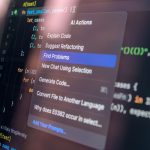
The magic happens when these models are integrated directly into integrated development environments (IDEs). Whether you’re using Visual Studio Code, JetBrains, or another platform, the assistant becomes an extension of your workflow, offering suggestions without disrupting your flow state.
For more on this topic, check out our guide on AI Video Generators: Transforming Content Creation in 2024.
Benefits of Using AI Coding Assistants
The advantages of incorporating ai coding assistants into your development process are both immediate and long-term. For starters, they dramatically reduce the time spent on routine coding tasks. Instead of manually typing out boilerplate code or searching through documentation, developers can focus on solving complex problems and innovating new features.
Time-Saving Automation
- Code Generation: Automatically write functions, classes, and methods based on natural language descriptions.
- Bug Detection: Identify potential errors and suggest fixes in real time.
- Documentation Assistance: Generate comments and API documentation with minimal input.
According to a recent study by Statista, developers using AI-powered tools report up to a 40% increase in productivity. This isn’t just about speed; it’s about efficiency. By reducing the cognitive load of remembering syntax or recalling best practices, these tools free up mental space for creativity and strategic thinking.
Common Use Cases for AI Coding Assistants
The versatility of ai coding assistants means they’re useful across a wide range of programming tasks. Whether you’re building a web application, debugging a legacy system, or learning a new language, these tools adapt to your needs.
For more on this topic, check out our guide on AI Image Generators: Creating Magic From Text.
Code Generation and Refactoring
One of the most popular uses is generating code from scratch. For example, if you write a comment like “create a React component that displays a user profile,” the assistant can produce clean, functional code. It can also help refactor existing code to improve readability, optimize performance, or modernize outdated practices.
Debugging and Error Correction
When your code throws an error, the assistant doesn’t just point it out, it often suggests fixes. Some tools even explain the error in plain language, making them especially helpful for beginners. This reduces the time spent debugging and helps developers learn from mistakes more effectively.
Tools like GitHub Copilot and Tabnine have become household names in this space. As Wired notes, these tools are blurring the line between human creativity and machine assistance in software development.

Challenges and Limitations
Despite their many benefits, ai coding assistants are not without challenges. One of the biggest concerns is accuracy. While these tools are impressive, they can sometimes suggest code that looks correct but contains subtle bugs or security vulnerabilities. Relying too heavily on them without thorough testing can lead to production issues.
Data Privacy and Security
When you use cloud-based coding assistants, your code is often sent to external servers for processing. This raises privacy concerns, especially when working on sensitive projects. Organizations must carefully evaluate the security policies of these tools and consider open-source or on-premise alternatives for proprietary code.
Over-Reliance and Skill Erosion
There’s also the risk of becoming too dependent on these tools. While they can speed up development, they don’t replace the need for a deep understanding of programming principles. Developers who rely solely on suggestions may miss opportunities to refine their skills and develop more robust problem-solving abilities.
The Future of AI Coding Assistants
As ai coding assistants continue to evolve, their integration with other AI-driven development tools will only deepen. Imagine an environment where your code assistant not only writes code but also deploys it, monitors performance, and even interacts with users to gather feedback. This vision is quickly becoming reality.
Personalized Development Environments
Future assistants will be tailored to individual developers, learning from their coding habits and preferences to offer hyper-personalized suggestions. This could include adapting to a developer’s preferred coding style, project-specific conventions, or even their favorite libraries and frameworks.
Integration with Collaborative Platforms
Another exciting trend is the integration of these tools with collaborative platforms like GitHub and GitLab. This would allow teams to share insights, co-develop code, and maintain consistency across projects. As Forbes highlights, this kind of collaboration is key to scaling software development in fast-moving industries.
Looking ahead, the line between human and artificial intelligence in coding will continue to blur. But the goal isn’t to replace developers, it’s to empower them with tools that amplify their creativity and efficiency. After all, the best code is still written by people who understand the problem, not just the syntax.
Frequently Asked Questions
Are AI coding assistants reliable for production code?
While these tools are highly accurate in many cases, they should never replace thorough testing and code review. Always validate the code they suggest, especially for critical applications or systems handling sensitive data.
Do I need to be an expert programmer to use them?
No. One of the strengths of ai coding assistants is their accessibility. Beginners can use them to learn syntax and best practices, while experienced developers can leverage them to speed up complex tasks.
Can I use these tools for all programming languages?
Most modern coding assistants support a wide range of languages, including JavaScript, Python, Java, C++, and more. However, their effectiveness can vary depending on the language’s complexity and the availability of training data.
Are there free versions of AI coding assistants?
Yes. Many tools offer free tiers or open-source alternatives. For example, GitHub Copilot provides a free trial, and Tabnine has both free and paid versions. It’s worth exploring the options to find one that fits your budget and needs.
How do I get started with using these tools?
Start by installing an extension in your favorite IDE. Most tools integrate seamlessly with platforms like VS Code or JetBrains. Once installed, simply start coding as usual and observe how the assistant offers suggestions in real time.
What’s the future of AI coding assistants?
In the coming years, we can expect these tools to become even more sophisticated, with better understanding of context, improved accuracy, and deeper integration into development workflows. They’ll likely play a central role in shaping how software is built in the future.
Conclusion
AI coding assistants are transforming software development by helping developers write code faster, reduce repetitive tasks, detect bugs, and improve overall productivity. Whether you’re a beginner or an experienced programmer, these tools can streamline workflows and support better coding practices.
As AI technology continues to evolve, coding assistants will become even more intelligent and personalized. However, they work best when combined with human expertise, critical thinking, and thorough testing, ensuring developers create secure, reliable, and high-quality software.
Ready to take your coding to the next level? Explore AI Writing Tools and see how artificial intelligence is transforming every aspect of software development. Whether you’re a seasoned developer or just starting out, the future of coding is here, and it’s smarter than ever.
