

























































Frank Sheeran: exploring the life controversy and legacy behind America’s most debated union figure

Introduction
The story of organized crime in America often sits between documented history and oral storytelling. Few names illustrate that tension better than Frank Sheeran. His life has been discussed in books, documentaries, and films, but what makes him especially compelling is not just what is known, but what remains uncertain.
When discussing Frank Sheeran, researchers, historians, and true crime readers are often trying to untangle fact from interpretation. His name appears in conversations about labor unions, post-war America, and alleged organized crime connections. Yet, much of his legacy is shaped by secondhand accounts and retrospective storytelling.
This article takes a deeper, more grounded look at his life, the environment he operated in, and why his story continues to attract global attention.
Early years and shaping influences
Frank Sheeran grew up in a working-class Irish American household during a period when industrial labor defined many American communities. Life was not easy, and like many young men of his generation, he entered the workforce early.
His early experiences shaped his resilience and physical toughness. These traits would later become central to how he was perceived by others in labor and union environments.
A defining moment in his early life was his military service during World War II. Exposure to war introduced him to extreme discipline, structured hierarchy, and survival conditions that permanently shaped his worldview.
After returning home, he struggled to find long-term stability. Like many veterans, he transitioned between jobs before entering trucking and labor-related industries. This period marked the beginning of his gradual association with powerful union networks.
Post-war America and the rise of labor influence
To understand Frank Sheeran’s environment, it is important to understand post-war America. The mid-20th century saw rapid industrial expansion, and labor unions became powerful institutions controlling wages, logistics, and employment conditions.
However, this influence also attracted corruption. In some cities, union leadership overlapped with criminal organizations seeking influence over contracts and labor negotiations.
Frank Sheeran operated within this complex system. His physical presence and reputation for handling difficult situations made him a valuable figure in environments where enforcement and negotiation often overlapped.
Over time, he became associated with individuals who operated at the intersection of legitimate labor leadership and underground influence networks. This is where his public image begins to shift from labor worker to controversial insider figure.

Entry into enforcement roles and organized labor environments
As Frank Sheeran moved deeper into union-related work, his responsibilities reportedly expanded beyond typical labor duties. In some accounts, he was involved in enforcing discipline, managing disputes, and acting as a trusted intermediary in sensitive negotiations.
These roles placed him close to individuals connected to organized crime networks that influenced labor sectors during that era. While the exact nature of his involvement remains debated, it is widely acknowledged that he was part of environments where criminal influence and union power overlapped.
This overlap is a critical part of understanding why Frank Sheeran remains a topic of historical discussion. The boundaries between legal labor activity and illegal influence were often blurred in mid-century industrial cities.
Connections to organized crime networks
The broader organized crime landscape in America during Frank Sheeran’s time included powerful families and networks operating in major cities. These groups often relied on non-Italian associates who could function as intermediaries in unions, trucking, and logistics.
Frank Sheeran is frequently associated with this role in various accounts. His work allegedly placed him near influential figures in organized crime, allowing him to operate within both legitimate and illicit environments.
However, it is important to distinguish between documented evidence and narrative accounts. While many stories describe his involvement in criminal operations, historical verification remains limited and contested.
What is clear is that Frank Sheeran existed in a world where organized crime had measurable influence over labor systems, particularly in transportation and union-controlled industries.
The Jimmy Hoffa connection and historical debate
One of the most discussed elements of Frank Sheeran’s legacy is his alleged connection to the disappearance of Jimmy Hoffa.
Hoffa was one of the most powerful labor leaders in American history, and his disappearance in 1975 remains officially unsolved. Over time, Frank Sheeran’s name has been mentioned in various narratives attempting to explain what happened.
Some accounts suggest he claimed involvement in the events leading up to Hoffa’s disappearance. However, these claims originate from retrospective storytelling and memoir-based sources rather than confirmed legal evidence.
Law enforcement agencies have never conclusively proven Frank Sheeran’s involvement in the case. As a result, his connection to Hoffa remains one of the most debated aspects of his life story.
This uncertainty is part of what keeps his legacy alive in public discourse.
The role of memoirs and storytelling in shaping legacy
A major turning point in how Frank Sheeran is viewed came with the publication of “I Heard You Paint Houses,” a memoir-style account that presents his life story in first-person narrative form.
The phrase itself is mafia slang referring to violent enforcement work, adding dramatic weight to the storytelling style. This book significantly influenced public perception and became the foundation for later cultural adaptations.
However, historians and researchers often emphasize that memoir-based accounts can reflect personal interpretation, selective memory, and narrative shaping. This means that while the book provides valuable insight, it should not be treated as a fully verified historical record.
Frank Sheeran’s story, as presented in such accounts, blends lived experience with reconstructed memory, making it difficult to separate fact from narrative enhancement.
Media adaptations and cultural transformation
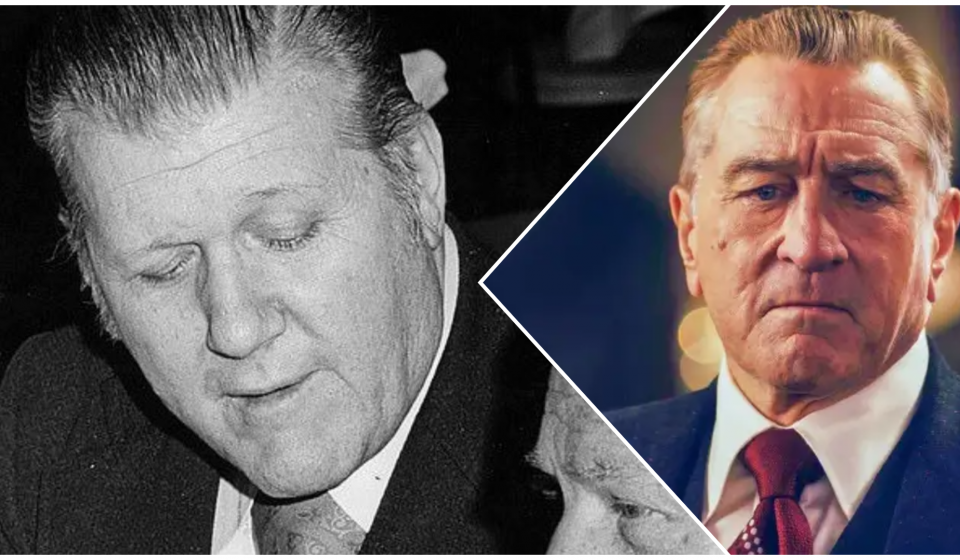
The modern image of Frank Sheeran has been heavily shaped by film and television adaptations that dramatize his life. These portrayals introduce global audiences to mid-century organized crime through a personal narrative lens.
While these adaptations help popularize historical topics, they also simplify complex realities. Characters are combined, timelines are adjusted, and events are dramatized for storytelling impact.
As a result, Frank Sheeran exists in two forms today. One is the historical figure referenced in labor and crime discussions. The other is a cultural figure shaped by entertainment media.
Both versions influence public understanding, but they serve different purposes: one for historical inquiry and the other for narrative engagement.
Evaluating evidence and historical uncertainty
When analyzing Frank Sheeran’s life, one of the biggest challenges is the scarcity of definitive documentation. Organized crime activity, by nature, often leaves limited verifiable records.
Much of what is known comes from interviews, memoirs, secondary reporting, and investigative interpretation. This creates a layered narrative structure where certainty is difficult to achieve.
Some researchers argue that Frank Sheeran played a more central role in organized crime operations, while others believe his importance has been amplified through storytelling and media influence.
This division highlights a broader issue in historical research: how memory and documentation interact in shaping public understanding.

Why the story continues to attract global attention
Interest in Frank Sheeran persists because his life represents more than one individual story. It reflects larger themes such as power dynamics, labor history, institutional corruption, and post-war American identity.
His narrative sits at the intersection of working-class struggle and alleged underground influence. This combination makes it relevant not only to true crime audiences but also to historians studying labor movements.
In many ways, Frank Sheeran has become a symbolic figure representing the blurred boundaries of mid-20th century industrial America.
Frequently asked questions
Who was Frank Sheeran?
He was a labor-related figure whose life has been linked in various accounts to organized crime environments in mid-20th century America.
Was he involved in major criminal cases?
There are claims and narratives, but no fully verified legal evidence confirming many of the allegations associated with him.
Why is he connected to Jimmy Hoffa?
Some accounts suggest a connection, but the case remains officially unsolved and widely debated.
Is his story fully factual?
Parts of his life are documented, but many details come from memoirs and secondary interpretations.
Why is he still discussed today?
Because his story represents the intersection of labor unions, organized crime history, and modern storytelling.
Conclusion
Frank Sheeran remains a figure surrounded by complexity and interpretation. His life story reflects a period in American history where labor power, industrial expansion, and underground influence often overlapped.
Rather than offering a single definitive narrative, his legacy exists in layers: documented history, personal accounts, and cultural adaptation. This combination is what keeps interest alive decades later.
In the end, his story is less about certainty and more about how history is remembered, retold, and reshaped over time.
